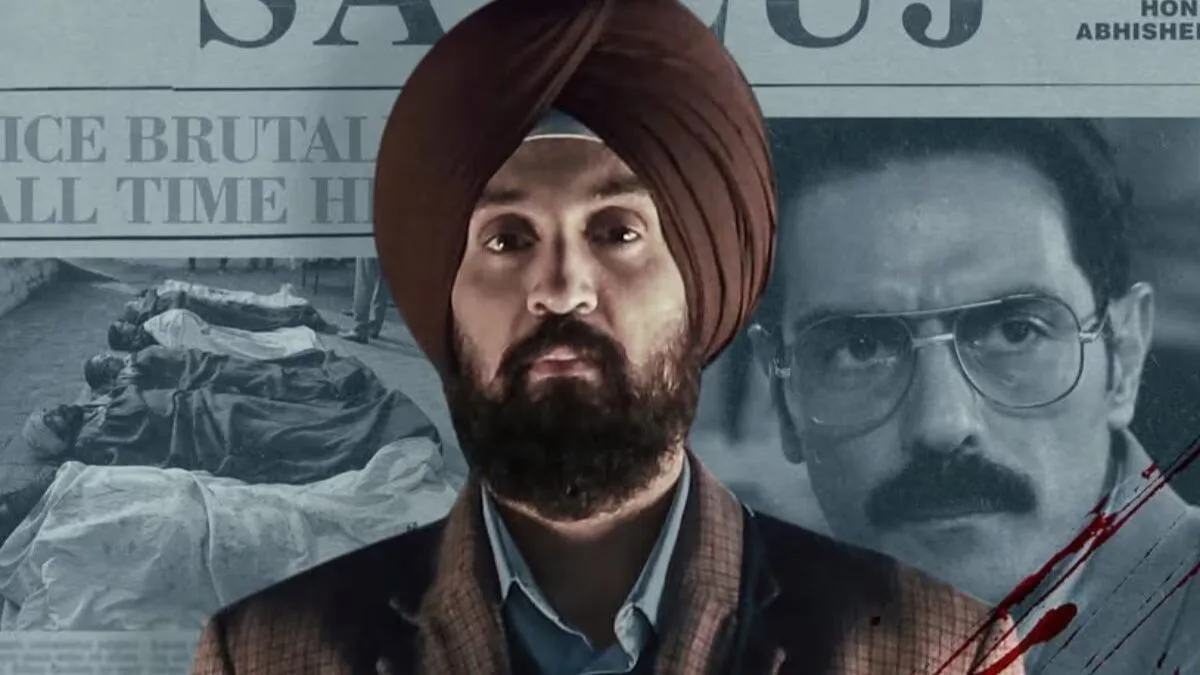
More than three decades after Punjab’s militancy reached its peak, a series of social media posts by Union Minister of State and BJP leader Ravneet Singh Bittu has reignited debate over one of the state’s darkest chapters. In recent days, Bittu has been sharing archival newspaper reports and historical references, arguing that the atrocities committed during the militancy era should not be forgotten, particularly amid the controversy surrounding actor-singer Diljit Dosanjh’s film Satluj.
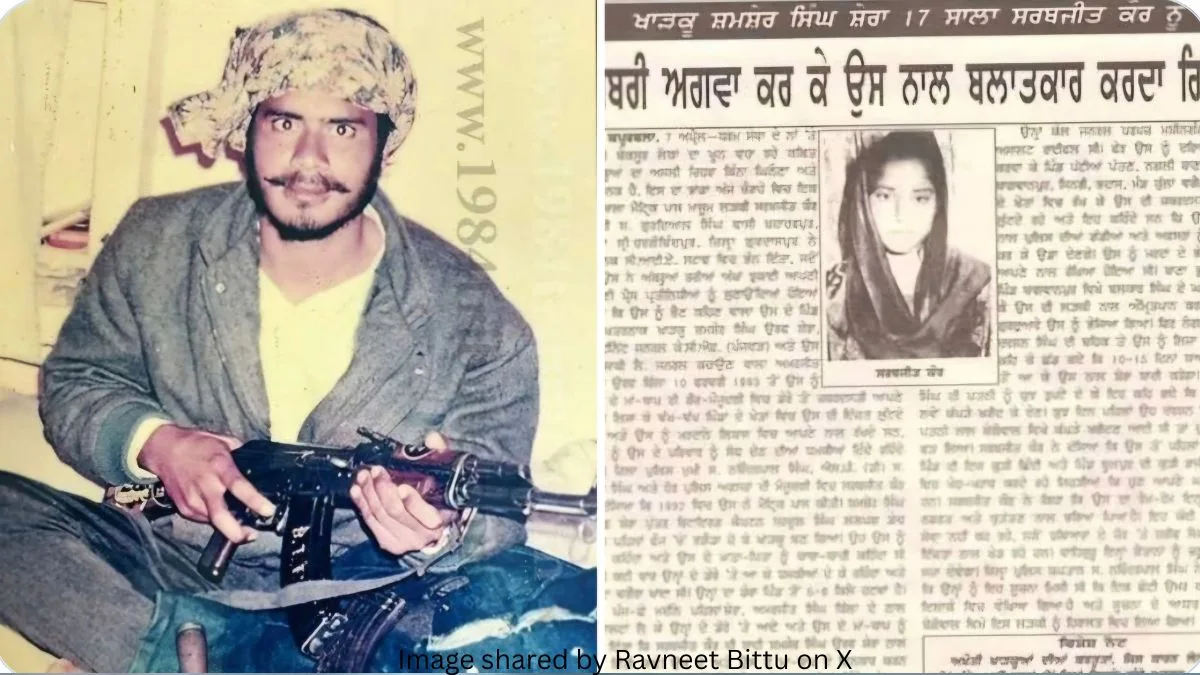
A day after posting material related to the widely discussed Nirmal Kanta (Kanta Principal) bomb blast case, Bittu on Saturday shared another archival newspaper clipping and a photograph identifying the person in it as Shamsher Singh alias Shera, whom he described as a member of the Khalistan Commando Force (KCF).
Advertisement
His latest post has once again drawn attention to a little-known but disturbing case reported during the militancy years and has intensified the political debate over how that period should be remembered.
A renewed political campaign
Bittu’s recent posts are widely being viewed as part of his response to criticism he has faced over his opposition to Satluj. The minister has repeatedly argued that discussions about Punjab’s militancy should focus on the suffering of victims rather than on narratives that, in his view, risk romanticising or sanitising those involved in violence.
Over the past several days, he has shared archival documents, newspaper reports and historical references relating to incidents from the late 1980s and early 1990s. According to Bittu, these records demonstrate the scale of violence endured by ordinary Punjabis during that period. His latest post follows the same pattern.
Who was Shamsher Singh alias Shera?
Publicly available information about Shamsher Singh alias Shera remains limited today.
Historical newspaper reports from the early 1990s identified him as a member of the Khalistan Commando Force, one of several militant organisations active during Punjab’s insurgency. Those reports linked him to serious criminal allegations, including violent attacks on civilians.
However, detailed public records about his background, later prosecution, or the complete judicial history of the cases associated with him are not readily available today. As a result, much of what is publicly discussed about Shera comes from contemporaneous newspaper reports and historical accounts rather than comprehensive court records.
The 1991 case cited by Bittu
In his social media post, Bittu referred to a newspaper report about an incident said to have occurred on February 10, 1991, in Bahadarpur village in Gurdaspur district.
According to the archival report shared by him, Shera and his associates allegedly attacked the home of a 17-year-old girl, Sarabjit Kaur. The report alleged that her parents were killed before she was abducted.
The same archival report further alleged that the teenager was held captive for several days and subjected to repeated sexual assault before police rescued her during an operation in which Shera was reportedly apprehended.
Bittu described the episode as “one of thousands of painful stories” from Punjab’s militancy years and concluded his post with the remark, “These are the shaheeds of Khalistan,” in an apparent criticism of those whom he accuses of glorifying individuals linked to militancy.
The allegations cited in Bittu’s post are based on the archival newspaper report he shared. They have not been independently verified to date, and no new official statement has been issued regarding the historical case.
Why is Bittu raising these issues now?
The timing is significant. The posts come amid continuing political controversy over Satluj, a film featuring Diljit Dosanjh that has triggered debate over the portrayal of Punjab’s militancy period.
Bittu has emerged as one of the film’s strongest critics, arguing that any public conversation about those years must acknowledge the suffering of victims and survivors.
His critics, meanwhile, have questioned his campaign, while his supporters argue that documenting violence against civilians is essential to preserving historical memory.
Against this backdrop, Bittu’s decision to publish successive archival reports appears aimed at reinforcing his argument that the human cost of militancy should remain central to discussions about that era.
Revisiting painful memories
The latest post follows Bittu’s earlier publication of archival material relating to the Nirmal Kanta (Kanta Principal) bomb blast case. By releasing multiple historical references over consecutive days, the minister has sought to highlight incidents that, according to him, illustrate the impact of militancy on ordinary families, educators and civilians across Punjab. These posts have revived public discussion not only about individual incidents but also about the broader question of how Punjab’s violent past should be remembered.
A continuing debate
Punjab’s militancy, which peaked during the 1980s and early 1990s, claimed thousands of lives, including civilians, police personnel, political workers and public servants. While the period has been extensively documented, many individual cases remain known primarily through archival media reports, making careful attribution especially important when revisiting them decades later.
Bittu’s latest intervention has therefore become part of a larger political and historical debate about whether revisiting such archival accounts is necessary to preserve the memory of victims, or whether these events should be discussed with additional historical context and documentary evidence.
As the controversy surrounding Satluj continues, the discussion has expanded beyond cinema to broader questions about historical memory, accountability and the legacy of one of Punjab’s most turbulent periods.